The truth is that dark parking lots feel intimidating and scary. To make parking lots safer after dark, businesses should repair failed lights, provide even illumination from parking spaces to entrances, clear blocked sightlines, and maintain visible signs and pedestrian routes. Start with a nighttime assessment, then prioritize repairs, targeted LED upgrades, appropriate security measures, and ongoing maintenance to support customer confidence.
A customer may decide whether to visit your business before reaching the door. A dark parking area, an unlit entrance, or a long walk through shadows can give someone a reason to keep driving.
In findings released in August 2026, a Harris Poll conducted on behalf of LiveView Technologies found that 52% of American women and 41% of men would avoid large, open-air retail parking lots after dark because of personal safety concerns. The online survey included 2,089 U.S. adults.
For retailers, restaurants, grocery stores, and convenience stores, the goal is clear: help customers see their surroundings, recognize your business, and follow a safe, clear route to the entrance.
Start with outages and dark areas on the routes customers use most. The order below is a starting point. An immediate hazard or a site's incident history may change the priorities.
Walk the property during evening operating hours, following the same route a customer takes from the parking space to the door. Include accessible parking, curb ramps, pickup areas, cart returns, and employee parking.
What it takes: A documented nighttime survey, electrical troubleshooting, necessary parts, and lift or bucket-truck access where required.
A bright doorway does little to reassure someone who must cross a dark section of the lot to reach it.
What it takes: A site plan, fixture inventory, nighttime measurements, and a design based on applicable lighting guidance and local requirements. Replacing older fixtures with LEDs on existing poles where suitable is generally simpler and more cost-effective than adding new infrastructure.
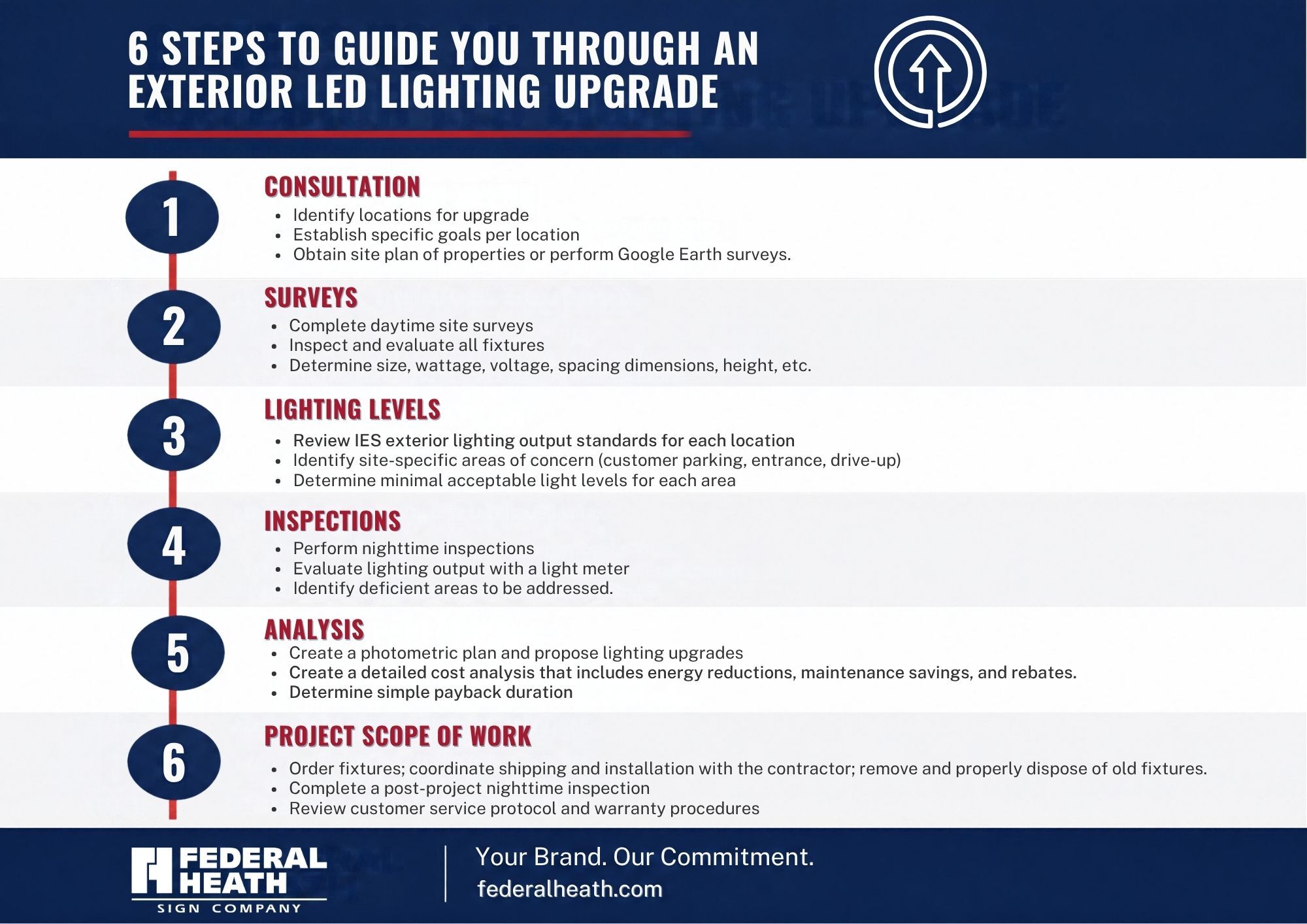
Federal Heath's LED upgrade guide outlines a useful process: consultation, site surveys, review of lighting levels, nighttime inspection, cost and lighting analysis, and a defined project scope. It also calls for a nighttime inspection after installation to verify the finished result.
3. Clear Sightlines and Make Walking Routes Easy to Follow
Trim plants and shrubs that block light or views between the storefront and parking areas. Move stored materials and other obstructions away from pedestrian routes, and inspect pavement, curbs, and wheel stops for hazards.
What it takes: Coordination among the property manager, landscaping contractor, pavement contractor, and sign service provider. Start with clearing and repairs, then price replacements by quantity and condition. Existing staff may handle routine checks and small cleanup tasks; landscaping, striping, pavement repairs, and sign work need site-specific quotes.
Lighting is one part of a broader safety plan. Review incident reports and customer concerns with the property's security team to determine whether cameras, patrols, or customer assistance would address remaining risks.
What it takes: A site security assessment, camera coverage, and nighttime testing where applicable, and an assigned response procedure. Equipment, installation, connectivity, monitoring, and patrol costs vary substantially; request a quote that separates upfront costs from recurring fees.
An upgrade only helps if the systems continue to perform.
What it takes: Designate one or more people within your organization to own the program. They will be responsible for scheduled inspections, defined service expectations, and a maintenance budget. Price professional inspections and service coverage by fixture count, pole height, access requirements, and frequency; request clarity on which repairs and parts are included.
For restaurants, those failures are highly visible. A dark letter, damaged drive-thru sign, or poorly illuminated pylon can affect how customers perceive the location before they ever enter the building.
Look at your property after dark. If customers cannot clearly see the route from their parking space to your entrance, begin with an assessment and the most urgent repairs.
Federal Heath helps businesses maintain signage and exterior lighting, including LED upgrades for signs and parking lot lighting, and coordinates service across multiple locations. Contact our team to discuss your property's needs and develop a practical plan to create a more visible, welcoming customer experience.