

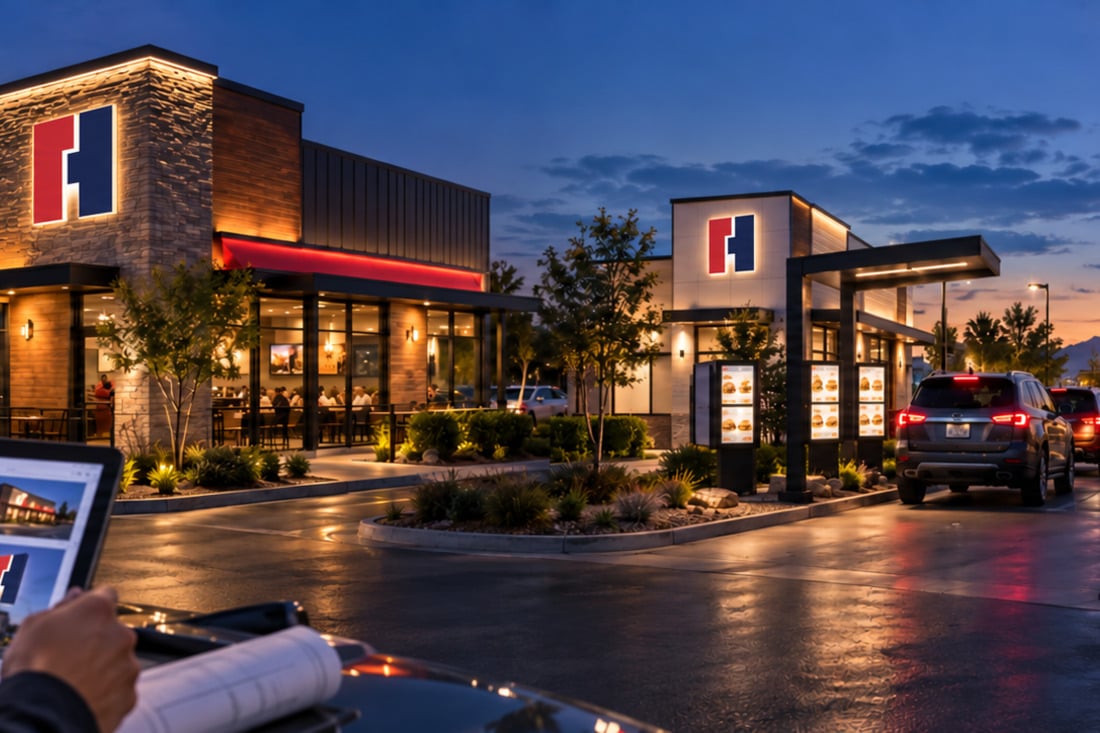
7 Questions Restaurant Chains Should Ask a National Signage Partner
Opening or remodeling multiple restaurant locations is a major undertaking. Construction schedules, permits, brand standards, equipment, franchisee requirements, and opening dates all must come together—often across several markets at the same time.
Signage is only one part of that process, but it touches nearly every stage. A delayed permit can hold up fabrication. An incomplete site survey can create installation problems. A missed brand detail can result in inconsistent locations and expensive rework.
Before choosing a national signage partner, restaurant development and facilities teams should look beyond the signs themselves. The right partner should be able to manage the complete program, communicate clearly, protect the brand, and support every location long after installation.
Here are seven questions restaurant chains should ask before awarding a multi-location signage rollout.
1. Can You Coordinate Signage with our Construction and Opening Schedules?
A national signage partner should be able to build its work around the restaurant’s broader development schedule—not manage signage as a separate, disconnected project.
Restaurant openings depend on many moving parts. Site surveys, design approvals, landlord requirements, permitting, engineering, fabrication, shipping, installation, electrical connections, and inspections must happen in the right order. A delay in one phase can affect several others.
Ask potential partners how they will:
- Coordinate with construction managers, architects, general contractors, franchisees, and internal teams
- Identify the milestones that affect signage
- Track dependencies and approval deadlines
- Respond when construction schedules change
- Escalate issues that could affect an opening date
- Coordinate installations without disrupting other site work
A capable partner will establish responsibilities, milestones, and communication expectations at the beginning of the program. Your team should know what information is needed, who owns each decision, and when approvals must be completed.
No multi-location rollout goes exactly according to plan. What matters is whether your signage partner identifies risks early, communicates them clearly, and adjusts without losing sight of the opening schedule.
2. How Do You Manage Permitting Across Different Municipalities?
A national signage partner should have a disciplined process for researching local sign codes, preparing applications, managing revisions, and tracking approvals across all markets throughout the rollout.
Sign requirements can change significantly from one municipality to another. Allowable square footage, sign height, illumination, setbacks, mounting methods, digital display rules, and inspection requirements may vary by location. Landlords and shopping centers may add another layer of criteria.
Before selecting a partner, ask:
- When does sign-code research begin?
- Who communicates with municipalities and landlords?
- How are permit requirements documented?
- How are exceptions, variances, and revisions handled?
- Will the team provide updates on pending permits?
- What happens if the original sign package cannot be approved?
Permitting should not begin after every other decision has already been made. Early code research helps the team understand what is possible at each location and where design adjustments may be required.
The strongest partners also recognize that permitting is not simply administrative work. It is part of risk management. Accurate applications, complete documentation, and consistent follow-up can help prevent unnecessary redesigns, stalled production, and missed installation windows.
3. Can You Maintain Brand Standards Across Corporate and Franchisee Locations?
A national signage partner should be able to protect the restaurant’s brand standards while adapting each sign package to local codes, landlord requirements, budgets, and site conditions.
That balance can be difficult. Corporate locations may follow a centralized development process, while franchisees may use different contractors, timelines, or approval paths. Existing buildings may also require modifications not included in the standard prototype.
Ask how the signage provider will:
- Document approved colors, materials, dimensions, illumination, and construction details
- Control revisions to the sign package
- Manage corporate and franchisee approvals
- Adapt standards when local conditions require a change
- Inspect finished products for consistency
- Maintain accurate records for future locations
Brand consistency does not mean forcing the same solution onto every building. It means preserving the visual elements customers should recognize while making responsible adjustments to the site.
A channel letter sign may require a different mounting method at one restaurant. A monument sign may need to be resized to comply with a local ordinance. Those adjustments should still feel unmistakably connected to the brand.
Your signage partner should understand that every restaurant is part of a larger brand experience. One inconsistent location can be noticeable. Repeated inconsistencies across a rollout can weaken customer recognition and create additional costs for the organization.
4. How Do You Manage Drive-Thru, Directional, Interior, and Exterior Signage Together?
A restaurant signage program should be managed as one connected customer experience, not as a collection of unrelated sign orders.
A typical location may include building signs, channel letters, pylon or monument signs, clearance bars, drive-thru directional signs, parking and pickup signs, window graphics, interior branding, and code-required signage.
Each element serves a different purpose, but all of them must work together.
Ask whether the provider can manage:
- Exterior identification signage
- Pylon and monument signs
- Channel letter signage
- Drive-thru and directional signage
- Pickup, curbside, and parking signs
- Interior signs and printed graphics
- Installation, closeout, warranty, and ongoing service
Using separate vendors for different elements can create gaps in accountability. Measurements may not match. Colors and materials can vary. Installations may be scheduled without considering other site activity. When a problem occurs, it may be unclear who owns the solution.
A turnkey signage and brand implementation partner can coordinate these elements through one program. That gives restaurant teams a clearer view of scope, schedule, cost, and responsibility while reducing the administrative burden of managing multiple vendors.
5. What Reporting Will Our Development and Facilities Teams Receive?
A national signage partner should provide reporting that gives stakeholders a clear, current view of every location, milestone, risk, and required decision.
Development leaders may be focused on opening dates and construction dependencies. Facilities teams may need warranty, service, and asset information. Finance may need cost visibility. Franchisees may only need updates for their individual locations.
One report will not always serve every audience.
Before the rollout begins, ask what information will be available and how frequently it will be updated. Useful reporting may include:
- Site survey status
- Design and artwork approvals
- Landlord approval status
- Permit submissions and approvals
- Engineering progress
- Production milestones
- Shipping and installation dates
- Open issues and responsible parties
- Budget or scope changes
- Inspection and closeout status
- Warranty and maintenance records
Good reporting should do more than document what already happened. It should help the team see what requires attention next.
The partner should also establish a clear communication structure. Restaurant chains should know who their primary contact is, how urgent issues are escalated, and when routine program reviews will occur.
Clear, proactive communication is one of the strongest indicators that a partner can manage a complex national program. It reduces surprises and gives internal teams the information they need to make timely decisions.
6. How Are Emergency Repairs and Preventive Maintenance Managed Nationally?
A national sign maintenance program should provide a single, clear process for requesting service, tracking repairs, controlling costs, and protecting brand appearance across all restaurant locations.
The relationship with a signage company should not end when installation is complete. Signs and exterior lighting operate in demanding conditions. Weather, electrical failures, vehicle damage, normal wear, and aging components can affect performance at any time.
For restaurants, those failures are highly visible. A dark letter, damaged drive-thru sign, or poorly illuminated pylon can affect how customers perceive the location before they ever enter the building.
Ask potential partners:
- How are service requests submitted and prioritized?
- Is emergency support available?
- Who coordinates technicians across different markets?
- How are estimates, approvals, and invoices managed?
- Will we receive photographs and completion documentation?
- Can service history be tracked by location and asset?
- Are preventive maintenance or inspection programs available?
- Can programs be customized to fit our budget and operating needs?
Facilities teams often have limited time to coordinate individual repairs across a large portfolio. Working with one national partner can simplify communication, reporting, billing, and follow-up.
Preventive maintenance can also help teams identify deteriorating components before they lead to larger failures, safety concerns, or emergency repair costs. The goal is not simply to fix signs after they fail. It is to keep each location visible, functional, and on brand.
7. Can Your Production Capacity Support Remodels, Conversions, and New Openings at the Same Time?
A signage provider should be able to demonstrate that it has the manufacturing capacity, project-management resources, installation coverage, and quality controls needed to support overlapping restaurant programs.
Restaurant chains rarely have only one type of project underway. A brand may be opening new stores while remodeling older locations, converting acquired sites, updating drive-thru systems, and completing maintenance work across the existing portfolio.
Those initiatives may compete for the same internal approvals, production space, materials, installers, and opening windows.
Ask the provider to explain:
- Where products will be manufactured
- How production capacity is planned
- How quality is controlled across large quantities
- How multiple programs are prioritized
- How material or equipment constraints are handled
- How installation resources are scheduled nationally
- What contingency plans are used when demand changes
- How consistency is maintained across separate production runs
Capacity is more than facility size. It includes experienced people, documented processes, reliable suppliers, project visibility, and the ability to respond when priorities shift.
A provider may be able to complete one successful restaurant location but still lack the infrastructure to manage 50, 100, or more locations on overlapping schedules. Before approving a national rollout, restaurant leaders should request evidence of comparable program experience and a realistic explanation of how the work will be delivered.
Choosing More Than a Sign Vendor
The right national signage partner does more than manufacture signs. It helps simplify a complex rollout, protect the restaurant’s brand, maintain visibility across locations, and give teams greater confidence in the process.
When comparing national restaurant signage providers, look for a partner that can bring design, engineering, permitting, fabrication, installation, project management, reporting, and maintenance together under one accountable program.
Federal Heath has spent 125 years helping recognizable brands stand out, stay consistent, and grow with confidence. Our teams manage turnkey signage and brand implementation programs from initial planning through installation and long-term maintenance.
We listen to our customers’ needs, work alongside their teams, and remain accountable before, during, and long after installation.
Planning a multi-location restaurant rollout? Talk with Federal Heath about creating a signage program tailored to your brand, locations, and growth plans.
Frequently Asked Questions
What should a restaurant chain look for in a national signage partner?
Restaurant chains should look for proven multi-location experience, turnkey capabilities, permitting expertise, dependable project management, manufacturing capacity, national installation coverage, clear reporting, and ongoing maintenance support. The provider should also demonstrate how it will protect brand standards across both corporate and franchisee locations.
What does turnkey restaurant signage include?
Turnkey restaurant signage typically includes site surveys, code research, design, engineering, permitting, fabrication, logistics, installation, inspections, project closeout, warranty administration, maintenance, and repair. Managing these services through one partner can reduce coordination demands and create clearer accountability.
Why is permitting important in a multi-location restaurant rollout?
Sign codes and approval processes vary by municipality, landlord, and site. Early permitting research helps identify restrictions before fabrication begins, reducing the risk of redesigning, change orders, installation delays, and missed opening dates.
How can restaurant chains maintain signage consistency across multiple locations?
Consistency starts with documented brand standards, controlled design approvals, accurate site surveys, repeatable manufacturing processes, and quality checks. A national signage partner should adapt signs to local requirements without losing the colors, materials, proportions, and visual details that make the restaurant brand recognizable.
Should maintenance be included when selecting a signage partner?
Yes. Including maintenance in the evaluation provides continuity after installation and gives facilities teams a clear process for repairs, inspections, reporting, and emergency response. It also helps keep restaurant exterior signage and lighting functional, safe, and on brand across the entire portfolio.